



Overview
What it is.
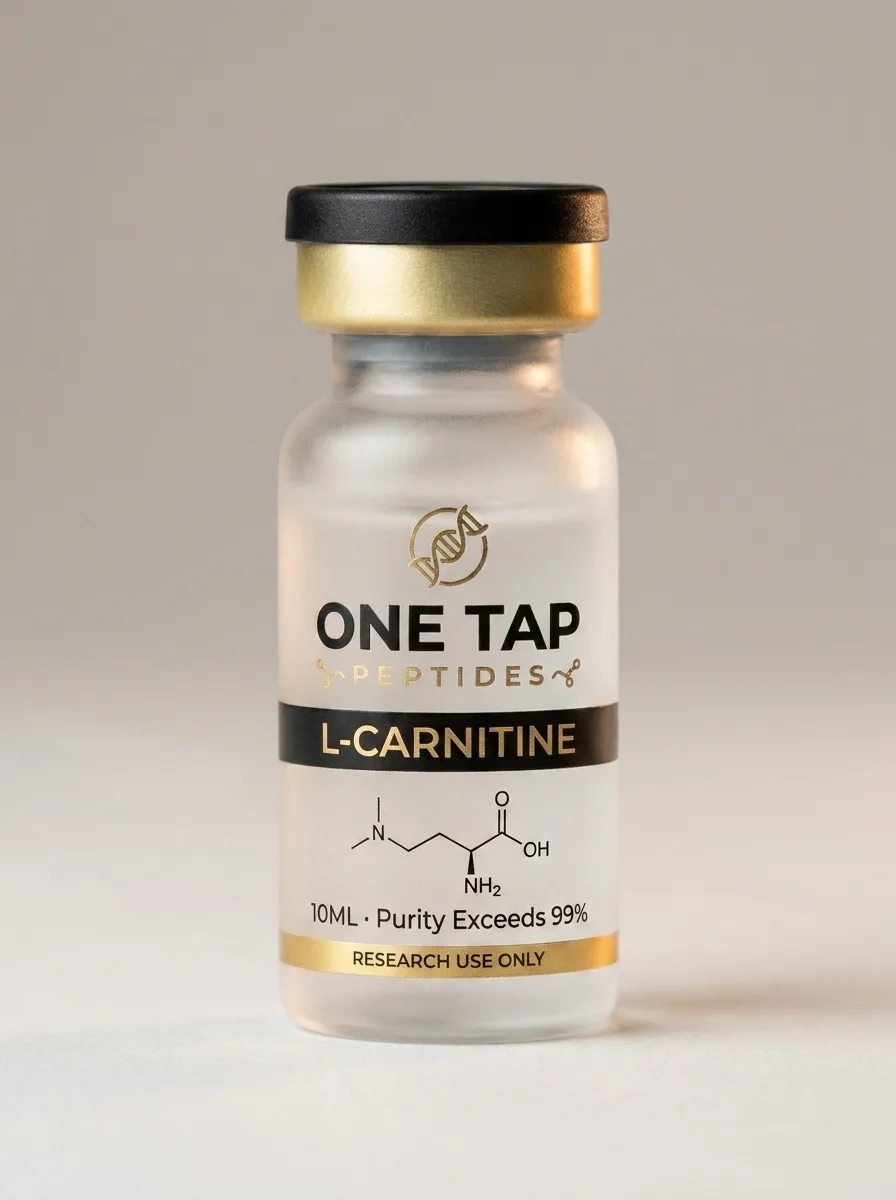
L-Carnitine is an amino-acid derivative the body uses to transport fatty acids into mitochondria for energy production, not a peptide, included here as a frequently co-requested compound in metabolic and exercise-physiology research protocols.
Research Areas
- Studied for its role in mitochondrial fatty-acid-transport research
- Studied for its potential role in exercise-physiology and recovery research
- Included as a frequently co-requested compound in metabolic research protocols
Batch & Testing
Proof, not promises.
COA ships with every order
The Certificate of Analysis for your batch ships in the box with your order. We're publishing the certificate archive here next.
Research Deep-Dive
How it works.
Research Deep-Dive
How it works.
L-Carnitine (levocarnitine) is an amino-acid derivative the body uses to transport long-chain fatty acids into mitochondria for energy production, supplied here as a ready-to-use liquid solution rather than a peptide.
It's studied for its role as a shuttle molecule, ferrying fatty acids across the mitochondrial membrane so they can be broken down for energy — a pathway of particular research interest in exercise physiology and metabolic research.
Use Cases Explored
- Studied for its role in mitochondrial fatty-acid-transport research
- Studied for its potential role in exercise-physiology and recovery research
- Included as a frequently co-requested compound in metabolic research protocols
The Evidence
Established nutritional-biochemistry literature
L-Carnitine's fatty-acid-transport mechanism is well characterized in nutritional-biochemistry and exercise-physiology research, with a research record predating the modern peptide-research field.
Not a peptide-class research subject
As an amino-acid derivative rather than a peptide, it's evaluated against a different, longer-established body of literature than the rest of this catalog.
Specifications
The essentials.
Specifications
The essentials.
- Form
- Liquid solution
- Storage
- Refrigerate at 2–8°C, protect from light
- Shelf life
- Per lot COA; use within stated window after first puncture
- Solubility
- N/A — supplied pre-mixed in solution
- Vial capacity
- 10 ml multi-dose vial
Questions
L-Carnitine FAQ
Questions
L-Carnitine FAQ
What is L-Carnitine studied for?+
L-Carnitine is studied for its role in mitochondrial fatty-acid-transport research and its potential role in exercise-physiology and recovery research.
Is L-Carnitine a peptide?+
No — it's an amino-acid derivative (levocarnitine), not a peptide. It's included here as a frequently co-requested compound in metabolic and exercise-physiology research protocols.
How should L-Carnitine be handled and stored?+
It ships pre-mixed in solution, so there's no reconstitution step. Refrigerate at 2–8°C, protect from light, and use within the window noted on the batch's COA after first puncture.
What testing does this batch undergo?+
Every batch is tested for identity and purity, plus sterility and endotoxin screening, before release. The Certificate of Analysis for that lot ships with your order.
Wellness Support
L-Carnitine
Levocarnitine
An amino-acid derivative, not a peptide, studied for its role in cellular fatty-acid-transport research.
Size
Multi-vial pricing
Per-vial pricing, applied automatically. No code needed.
Ships within 24 hours · $20 flat shipping · Free over $200
Pay simply and securely via Zelle or Apple Pay (Apple Cash) — instructions are emailed the moment you order. How payment works →
Satisfaction guarantee — if a batch's documentation doesn't check out, contact support and we'll make it right.
All products sold by One Tap Peptides are intended for laboratory research use only. Not for human consumption. Not intended for animal use. Not intended for diagnostic or therapeutic purposes.
Related