





Overview
What it is.
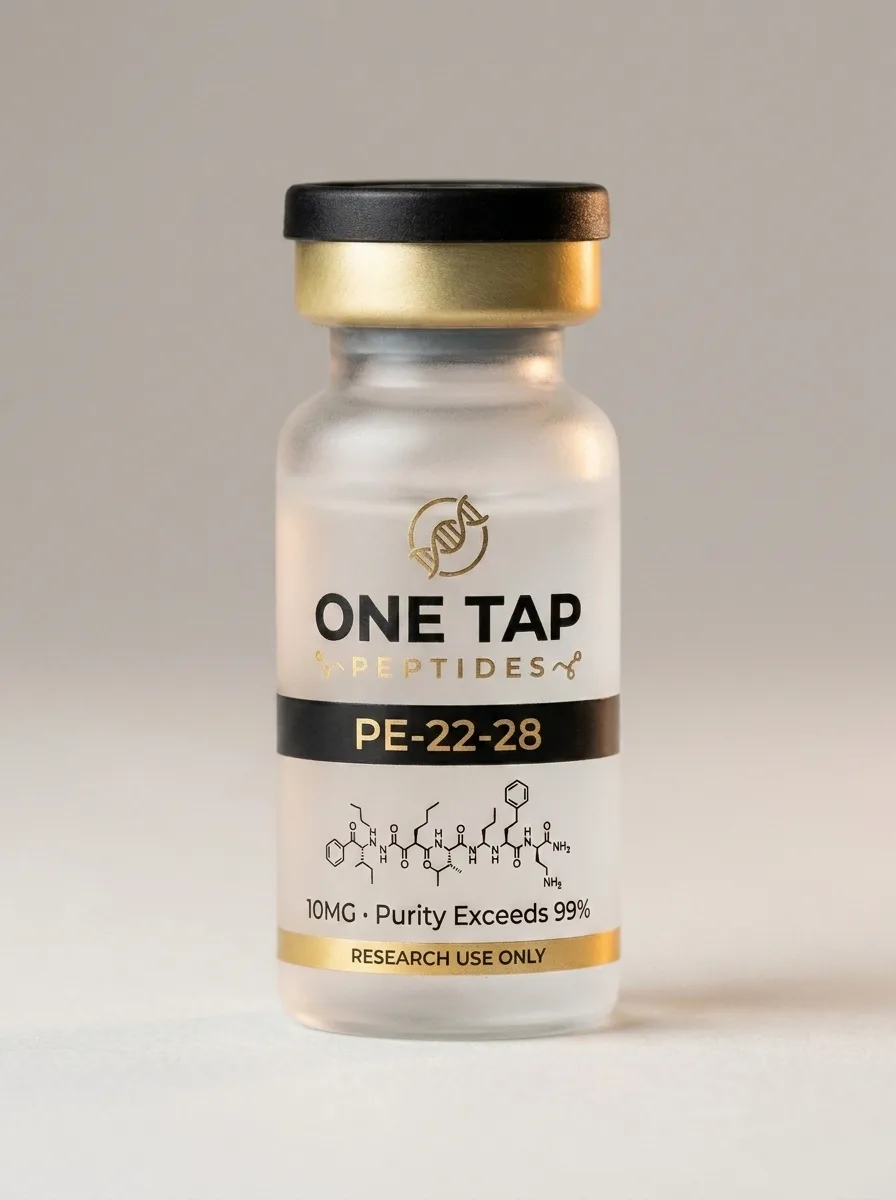
PE-22-28 is a stabilized peptide fragment derived from spadin, studied for its interaction with the TREK-1 potassium channel — a research target more commonly associated with mood- and neuroprotection-pathway research than tissue repair specifically, and grouped here alongside the catalog's other stability-focused peptide analogs.
Research Areas
- Studied for its interaction with TREK-1 potassium-channel signaling
- Studied as a stabilized fragment with an improved research handling profile over native spadin
- Studied for its potential role in neuroprotective and mood-pathway research
Batch & Testing
Proof, not promises.
COA ships with every order
The Certificate of Analysis for your batch ships in the box with your order. We're publishing the certificate archive here next.
Research Deep-Dive
How it works.
Research Deep-Dive
How it works.
PE-22-28 is a stabilized peptide fragment derived from spadin, engineered for improved research handling compared with native spadin, and studied primarily for its interaction with a specific potassium channel rather than for tissue-repair signaling directly.
It's studied for modulating the TREK-1 potassium channel, a target more closely associated with mood-regulation and neuroprotection research than with tissue repair — spadin-derived compounds were originally investigated as TREK-1 antagonists in depression-adjacent research models.
Use Cases Explored
- Studied for its interaction with TREK-1 potassium-channel signaling
- Studied as a stabilized fragment with improved research handling over native spadin
- Studied for its potential role in neuroprotective and mood-pathway research
The Evidence
Preclinical animal models
PE-22-28's TREK-1-modulating effects have been studied primarily in rodent models; there is no published human clinical trial data for this compound.
Narrow, specialized research base
As a stability-focused derivative of a research chemical (spadin) that itself has a fairly narrow research footprint, PE-22-28's evidence base is smaller than most other compounds in this catalog.
Specifications
The essentials.
Specifications
The essentials.
- Form
- Lyophilized powder
- Storage
- Store in a cool, dry place. Refrigerate at 2–8°C after reconstitution
- Shelf life
- 24 months lyophilized; 4–6 weeks refrigerated after reconstitution
- Solubility
- Reconstitute with bacteriostatic water
- Vial capacity
- 3 ml glass vial
Questions
PE-22-28 FAQ
Questions
PE-22-28 FAQ
What is PE-22-28 studied for?+
PE-22-28 is studied for its interaction with TREK-1 potassium-channel signaling and its potential role in neuroprotective and mood-pathway research.
Why is PE-22-28 grouped under Tissue Repair when its research focus is TREK-1 and neuroprotection?+
It's a stabilized fragment derived from spadin, and the catalog groups it alongside other stability-focused peptide analogs rather than strictly by mechanism — its actual research literature centers on TREK-1 channel modulation more than tissue repair specifically.
How should PE-22-28 be handled and stored?+
It ships as a lyophilized powder in a single 10 mg size. Reconstitute with bacteriostatic water and refrigerate at 2–8°C after mixing — good for roughly 4–6 weeks refrigerated, or up to 24 months unreconstituted in a cool, dry place.
What testing does this batch undergo?+
Every batch is HPLC tested for purity and identity, plus sterility and endotoxin screening, before release. The Certificate of Analysis for that lot ships with your order.
Tissue Repair
PE-22-28
Spadin-derived TREK-1 modulator
A stabilized spadin-derived fragment studied for TREK-1 channel modulation in neuroprotective research.
Size
Multi-vial pricing
Per-vial pricing, applied automatically. No code needed.
Ships within 24 hours · $20 flat shipping · Free over $200
Pay simply and securely via Zelle or Apple Pay (Apple Cash) — instructions are emailed the moment you order. How payment works →
Satisfaction guarantee — if a batch's documentation doesn't check out, contact support and we'll make it right.
All products sold by One Tap Peptides are intended for laboratory research use only. Not for human consumption. Not intended for animal use. Not intended for diagnostic or therapeutic purposes.
Related