


Overview
What it is.
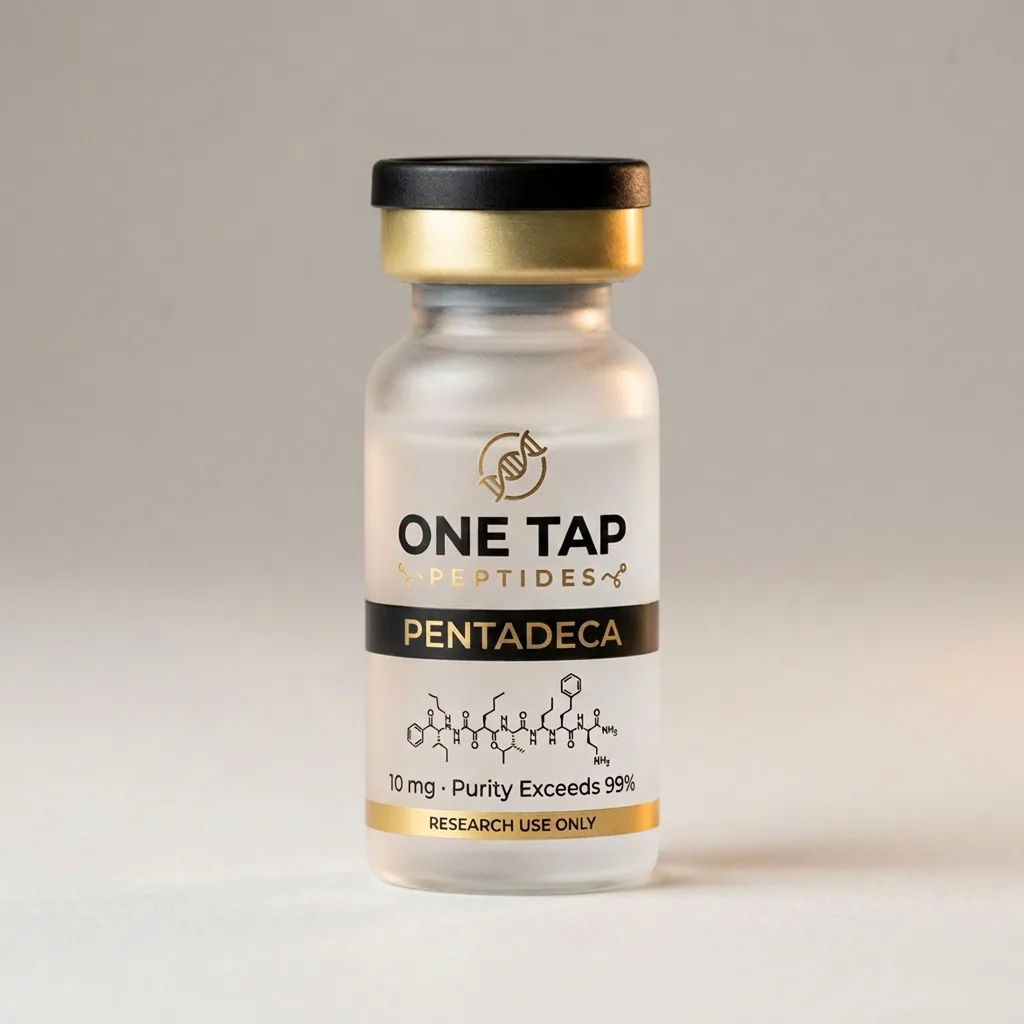
Pentadeca Arginate is a modified peptide developed as a stability- and bioavailability-focused counterpart to BPC-157. Its research base is newer and smaller than BPC-157's, and it is studied largely alongside comparable tissue-repair-signaling questions.
Research Areas
- Studied for its potential role in tissue-repair-signaling research, building on BPC-157-adjacent research
- Studied for stability and bioavailability compared with related peptides
Batch & Testing
Proof, not promises.
COA ships with every order
The Certificate of Analysis for your batch ships in the box with your order. We're publishing the certificate archive here next.
Research Deep-Dive
How it works.
Research Deep-Dive
How it works.
Pentadeca Arginate (PDA) is a peptide marketed as a next-generation alternative to BPC-157 — it uses the identical 15-amino-acid sequence as BPC-157, but paired with an arginine salt instead of the standard acetate salt. It emerged largely as a response to BPC-157's regulatory restrictions, positioned in marketing as a more stable, "legal" successor.
Because PDA shares BPC-157's exact amino acid sequence, any proposed mechanism — angiogenesis support, fibroblast activity, growth-factor interaction — is inherited from BPC-157 research rather than established independently. The arginine counterion is claimed to improve chemical stability, but that is a formulation change, not a different biological mechanism.
Use Cases Explored
- Marketed (not independently studied) as an alternative to BPC-157 for tissue-repair-adjacent research interest
- Discussed in stability/formulation contexts relative to BPC-157 acetate
The Evidence
No PDA-specific research exists
As of 2026, there are no peer-reviewed studies evaluating pentadeca arginate as its own molecule and no human clinical trials — a fact multiple independent reviews converge on. Everything claimed about PDA is extrapolated from BPC-157 studies, which were conducted on the acetate salt, not the arginate form.
Unverified stability claim
A widely repeated marketing claim that the arginate salt is dramatically more stable than BPC-157 acetate at stomach-acid pH has not been published in any peer-reviewed journal.
Inherited BPC-157 evidence limits
Even the BPC-157 evidence PDA borrows from is thin in humans — a 2025 systematic review found only one human study (an uncontrolled 12-patient case series) among 36 included papers. Regulatory analysis has also found PDA meets none of the standard criteria for legitimate 503A pharmacy compounding.
Specifications
The essentials.
Specifications
The essentials.
- Form
- Lyophilized powder
- Storage
- Store in a cool, dry place. Refrigerate at 2–8°C after reconstitution
- Shelf life
- 24 months lyophilized; 4–6 weeks refrigerated after reconstitution
- Solubility
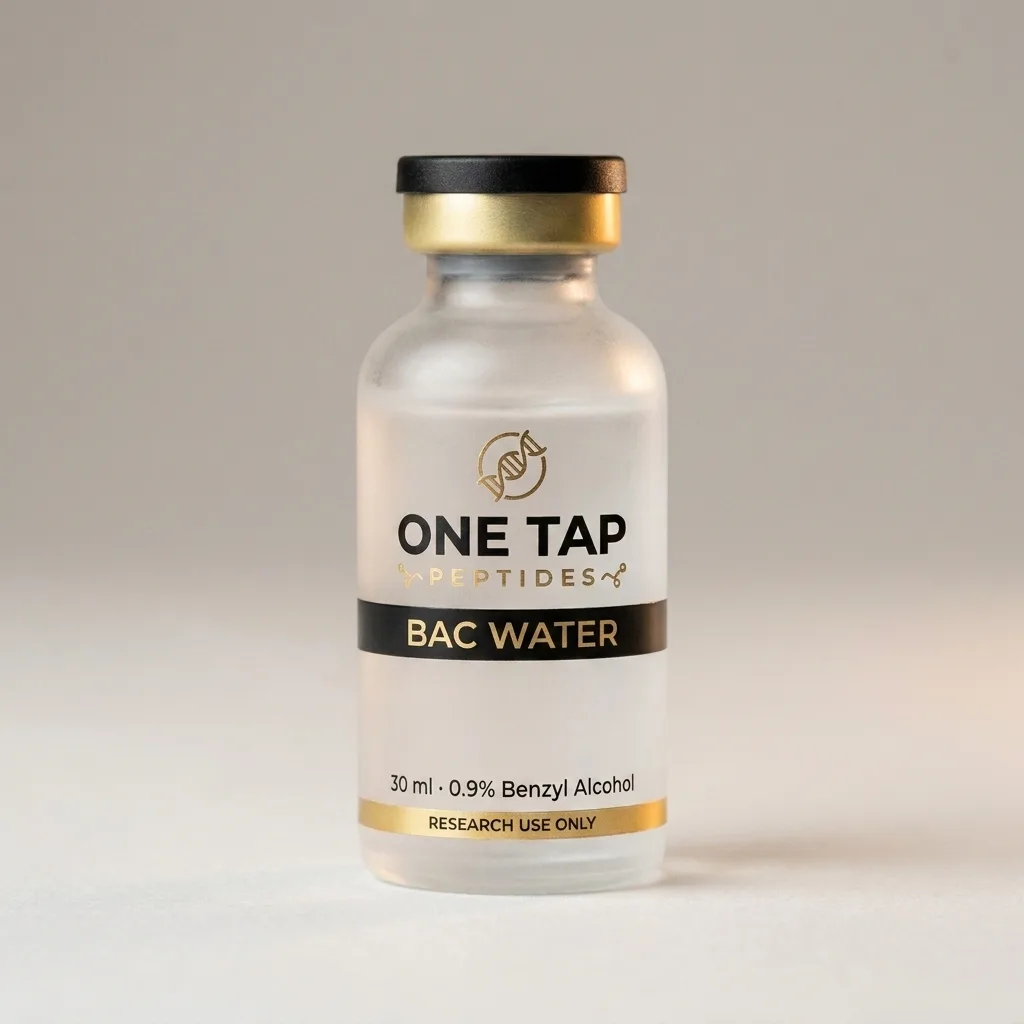
- Reconstitute with bacteriostatic water
- Vial capacity
- 3 ml glass vial
Questions
Pentadeca Arginate FAQ
Questions
Pentadeca Arginate FAQ
What is Pentadeca Arginate studied for?+
Pentadeca Arginate is studied for tissue-repair-signaling research, building on questions first raised in BPC-157-adjacent research, alongside its own stability and bioavailability profile.
How does Pentadeca Arginate's research base compare with BPC-157's?+
It's considerably smaller and newer — much of what's discussed about it draws on BPC-157-adjacent research rather than PDA-specific studies.
What does the 'Arginate' in Pentadeca Arginate refer to?+
It refers to the arginine-salt modification applied to the base peptide, studied as a way to improve stability and bioavailability compared with the parent compound.
How should Pentadeca Arginate be handled and stored?+
It ships as a lyophilized powder. Reconstitute with bacteriostatic water and refrigerate at 2–8°C after mixing — good for roughly 4–6 weeks refrigerated, or up to 24 months unreconstituted in a cool, dry place.
Tissue Repair
Pentadeca Arginate
PDA
A newer, arginine-modified peptide studied as a stability-focused counterpart to BPC-157.
Size
Multi-vial pricing
Per-vial pricing, applied automatically. No code needed.
Ships within 24 hours · $20 flat shipping · Free over $200
Pay simply and securely via Zelle or Apple Pay (Apple Cash) — instructions are emailed the moment you order. How payment works →
Satisfaction guarantee — if a batch's documentation doesn't check out, contact support and we'll make it right.
All products sold by One Tap Peptides are intended for laboratory research use only. Not for human consumption. Not intended for animal use. Not intended for diagnostic or therapeutic purposes.
Related