


Overview
What it is.
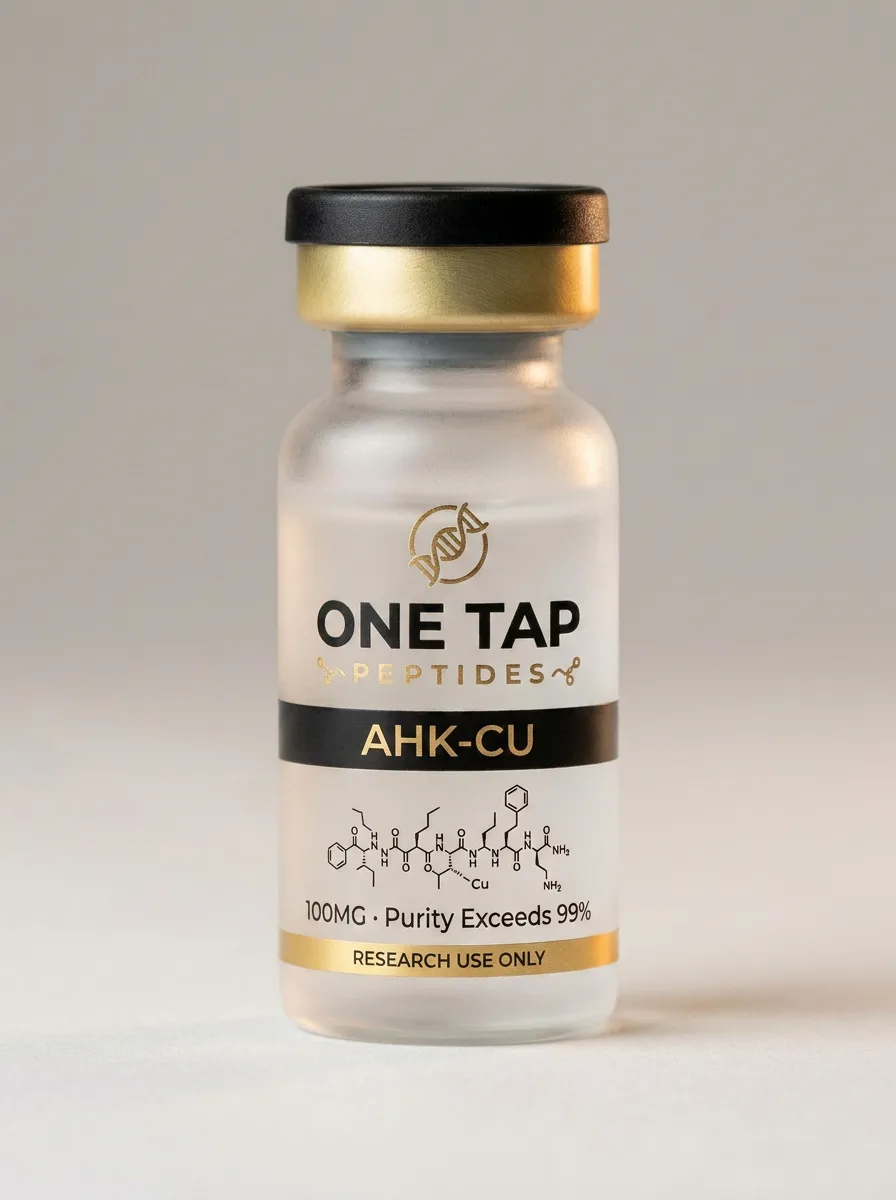
AHK-Cu is a copper-binding tripeptide in the same broad research class as GHK-Cu but with a distinct amino-acid sequence and binding profile, studied for comparative skin-quality and repair-signaling research alongside its better-known counterpart.
Research Areas
- Studied for its copper-binding activity and comparison to GHK-Cu research
- Studied for its potential role in skin-repair-signaling research
- Studied for its potential role in collagen-related signaling research
Batch & Testing
Proof, not promises.
COA ships with every order
The Certificate of Analysis for your batch ships in the box with your order. We're publishing the certificate archive here next.
Research Deep-Dive
How it works.
Research Deep-Dive
How it works.
AHK-Cu is a copper-binding tripeptide in the same broad research class as GHK-Cu, but with a distinct amino-acid sequence (alanine-histidine-lysine) and binding profile, studied as a comparative research subject alongside its better-known counterpart.
Like GHK-Cu, it's studied for chelating copper and delivering it to tissue in a bioavailable form thought to support the skin's natural repair-signaling and collagen-related processes — though its distinct sequence means researchers can't assume identical downstream effects to GHK-Cu without direct study.
Use Cases Explored
- Studied for its copper-binding activity and comparison to GHK-Cu research
- Studied for its potential role in skin-repair-signaling research
- Studied for its potential role in collagen-related signaling research
The Evidence
Smaller, newer research base than GHK-Cu
AHK-Cu has a considerably smaller published research record than GHK-Cu, with most available studies focused on in vitro or topical-formulation contexts rather than systemic research.
Comparative copper-peptide studies
Much of the interest in AHK-Cu is driven by its structural similarity to GHK-Cu rather than an independent, compound-specific evidence base.
Specifications
The essentials.
Specifications
The essentials.
- Form
- Lyophilized powder
- Storage
- Store in a cool, dry place. Refrigerate at 2–8°C after reconstitution
- Shelf life
- 24 months lyophilized; 4–6 weeks refrigerated after reconstitution
- Solubility
- Reconstitute with bacteriostatic water
- Vial capacity
- 3 ml glass vial
Questions
AHK-Cu FAQ
Questions
AHK-Cu FAQ
What is AHK-Cu studied for?+
AHK-Cu is studied for its copper-binding activity and comparison to GHK-Cu research, examined for a potential role in skin-repair and collagen-related signaling research.
How is AHK-Cu different from the GHK-Cu already on this site?+
They're both copper-binding tripeptides but with distinct amino-acid sequences and binding profiles — researchers studying copper-peptide signaling sometimes compare the two directly.
Why would a researcher choose AHK-Cu over GHK-Cu for a study?+
It's typically a comparative-research decision rather than a 'better/worse' one — researchers studying copper-peptide binding profiles use AHK-Cu and GHK-Cu side by side rather than as interchangeable substitutes.
How should AHK-Cu be handled and stored?+
It ships as a lyophilized powder in a single 100 mg size. Reconstitute with bacteriostatic water and refrigerate at 2–8°C after mixing — good for roughly 4–6 weeks refrigerated, or up to 24 months unreconstituted in a cool, dry place.
Cellular & Longevity
AHK-Cu
Alanine-Histidine-Lysine copper tripeptide
A copper-binding tripeptide, distinct from GHK-Cu, studied for skin- and repair-signaling research.
Size
Multi-vial pricing
Per-vial pricing, applied automatically. No code needed.
Ships within 24 hours · $20 flat shipping · Free over $200
Pay simply and securely via Zelle or Apple Pay (Apple Cash) — instructions are emailed the moment you order. How payment works →
Satisfaction guarantee — if a batch's documentation doesn't check out, contact support and we'll make it right.
All products sold by One Tap Peptides are intended for laboratory research use only. Not for human consumption. Not intended for animal use. Not intended for diagnostic or therapeutic purposes.
Related