



Overview
What it is.
Cadiogen belongs to the same short-chain 'bioregulator' peptide research family as Pinealon and Thymalin, studied in this line of research for tissue-specific signaling — in this case cardiac tissue — with most supporting literature originating from the same research program.
Research Areas
- Studied as part of a broader bioregulator-peptide research program
- Studied for its potential role in cardiac-tissue-signaling research
- Studied in small-scale trials, primarily published in Russian-language literature
Batch & Testing
Proof, not promises.
COA ships with every order
The Certificate of Analysis for your batch ships in the box with your order. We're publishing the certificate archive here next.
Research Deep-Dive
How it works.
Research Deep-Dive
How it works.
Cadiogen belongs to the short-chain 'bioregulator' peptide research family that also includes Pinealon and Thymalin, studied for tissue-specific signaling — in Cadiogen's case, cardiac tissue — within the same broader Russian research program.
Like other bioregulator peptides, Cadiogen is a short synthetic sequence studied for a proposed role in regulating gene expression within a specific tissue type, though the precise molecular mechanism is less thoroughly characterized in Western scientific literature than in the originating research program.
Use Cases Explored
- Studied as part of a broader bioregulator-peptide research program
- Studied for its potential role in cardiac-tissue-signaling research
The Evidence
Limited, largely Russian-language literature
Cadiogen's research base is honestly thin by comparison with better-established compounds in this catalog — most supporting literature is small-scale and published in Russian-language sources, with little independent replication in Western peer-reviewed journals.
Shared bioregulator-class mechanism research
Some mechanistic understanding is inherited from the broader bioregulator-peptide research program rather than from Cadiogen-specific studies.
Specifications
The essentials.
Specifications
The essentials.
- Form
- Lyophilized powder
- Storage
- Store in a cool, dry place. Refrigerate at 2–8°C after reconstitution
- Shelf life
- 24 months lyophilized; 4–6 weeks refrigerated after reconstitution
- Solubility
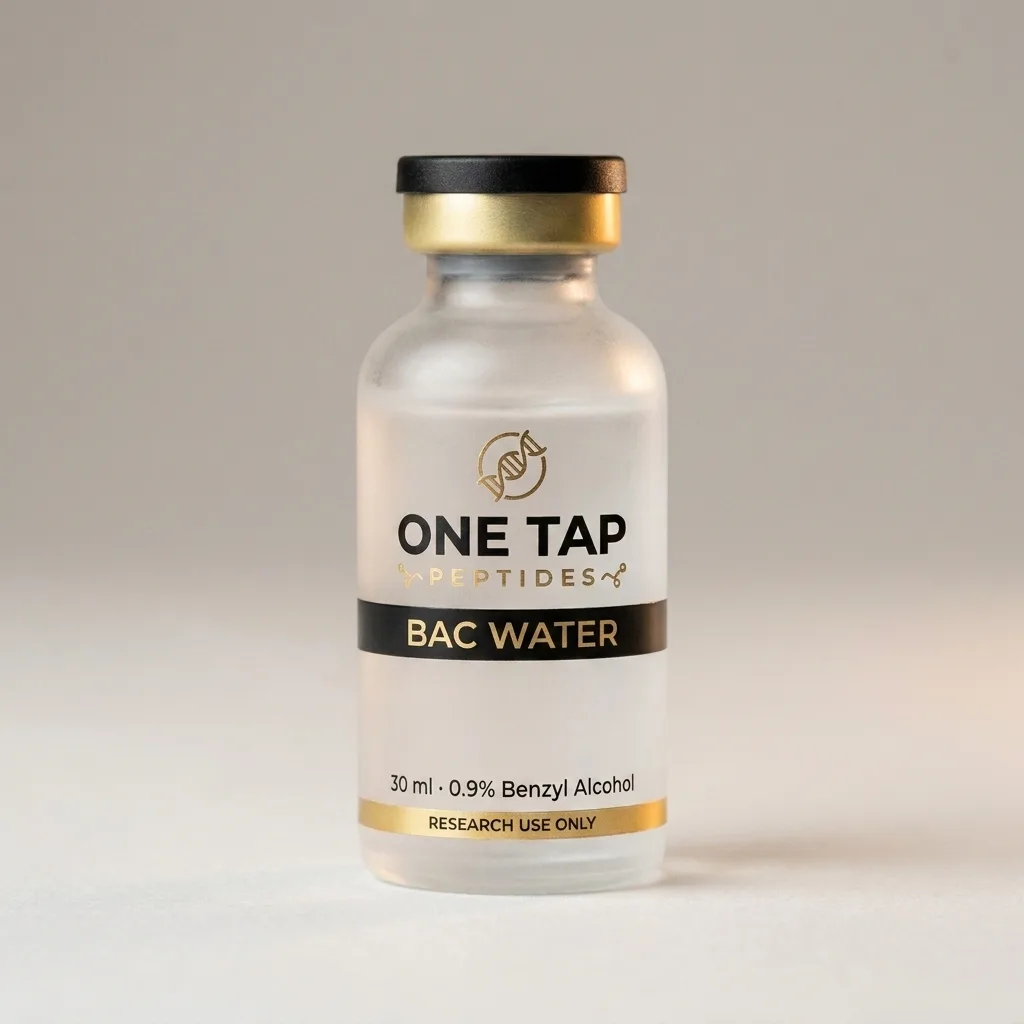
- Reconstitute with bacteriostatic water
- Vial capacity
- 3 ml glass vial
Questions
Cadiogen FAQ
Questions
Cadiogen FAQ
What is Cadiogen studied for?+
Cadiogen is studied for a potential role in cardiac-tissue-signaling research, as part of a broader bioregulator-peptide research program alongside compounds like Pinealon and Thymalin.
What is the 'bioregulator' peptide research family Cadiogen belongs to?+
It's a class of short-chain peptides, including Pinealon and Thymalin, studied for tissue-specific signaling. The research base here is honestly limited — most supporting literature comes from small-scale trials, primarily published in Russian-language sources.
How should Cadiogen be handled and stored?+
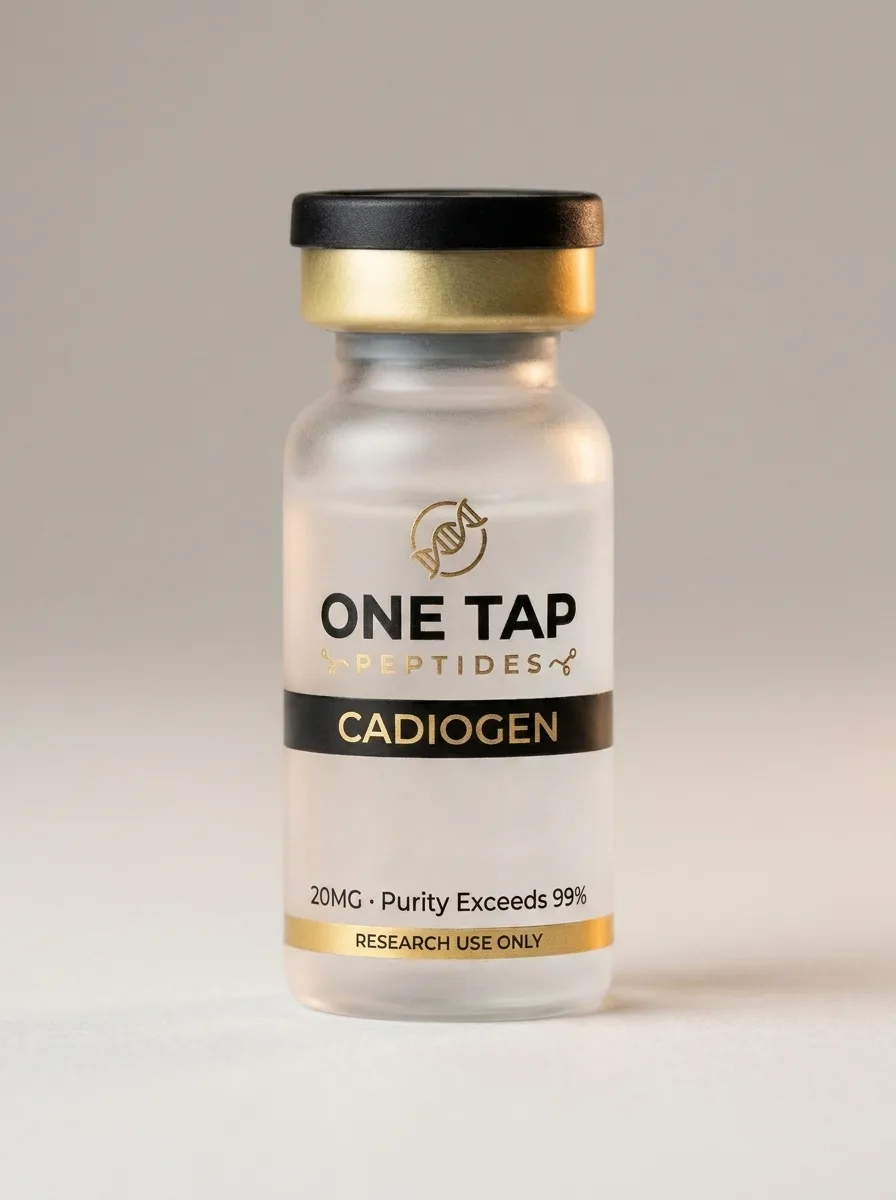
It ships as a lyophilized powder in a single 20 mg size. Reconstitute with bacteriostatic water and refrigerate at 2–8°C after mixing — good for roughly 4–6 weeks refrigerated, or up to 24 months unreconstituted in a cool, dry place.
What testing does this batch undergo?+
Every batch is HPLC tested for purity and identity, plus sterility and endotoxin screening, before release. The Certificate of Analysis for that lot ships with your order.
Cellular & Longevity
Cadiogen
Cardiac-tissue bioregulator peptide
A short bioregulator peptide studied for cardiac-tissue-signaling research, in the Pinealon/Thymalin research family.
Size
Multi-vial pricing
Per-vial pricing, applied automatically. No code needed.
Ships within 24 hours · $20 flat shipping · Free over $200
Pay simply and securely via Zelle or Apple Pay (Apple Cash) — instructions are emailed the moment you order. How payment works →
Satisfaction guarantee — if a batch's documentation doesn't check out, contact support and we'll make it right.
All products sold by One Tap Peptides are intended for laboratory research use only. Not for human consumption. Not intended for animal use. Not intended for diagnostic or therapeutic purposes.
Related